

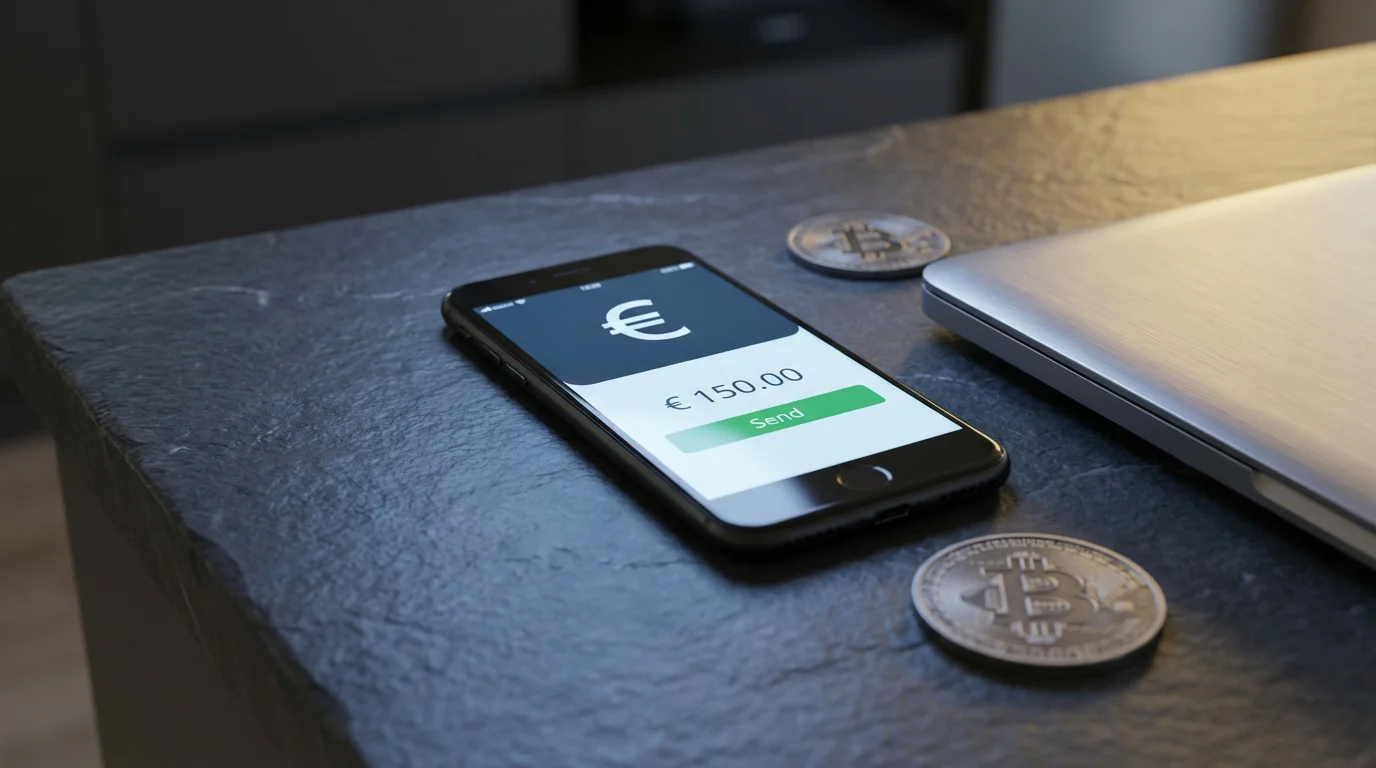
The Payment Landscape Outside GamStop
The payment page at a non-GamStop casino looks different from what UK players are used to. At a UKGC-licensed site, the options are tightly controlled: debit cards, a selection of e-wallets, and bank transfers. Credit cards are banned for gambling transactions since April 2020 (Gambling Commission). Cryptocurrency is largely absent. The UKGC’s approach to payment methods is deliberately restrictive — every method permitted must meet specific requirements around consumer protection, traceability, and anti-money-laundering compliance.
Non-GamStop casinos operate under different regulatory frameworks that permit — and in some cases actively encourage — a broader range of payment options. Credit cards are accepted at most offshore sites. Cryptocurrency is not just available but often the preferred method, with dedicated crypto bonuses and faster processing times. E-wallets like Skrill and Neteller function much as they do at regulated sites, but with fewer restrictions on gambling-related transactions. Prepaid vouchers, bank transfers, and occasionally mobile payment solutions round out a payment ecosystem that offers more choice but also requires more judgement from the player.
More options do not automatically mean better options. Each payment method carries its own combination of speed, cost, privacy, and risk. A credit card deposit is instant but introduces the danger of gambling with borrowed money. Cryptocurrency transfers are fast and private but subject to price volatility between deposit and withdrawal. E-wallets provide a useful buffer between your bank account and the casino but may charge fees on both ends. Understanding the mechanics of each method — not just how to deposit, but how withdrawals work, what fees apply, and what happens when something goes wrong — is as important as understanding the games themselves.
The categories break down into four broad groups: cards (debit and credit), e-wallets (Skrill, Neteller, and occasionally PayPal), cryptocurrency (Bitcoin, Ethereum, stablecoins, and altcoins), and prepaid/bank transfers (Paysafecard, Neosurf, direct wire). Most non-GamStop players maintain two or three active methods — one for deposits, one for withdrawals, and sometimes a third as backup. The ideal stack depends on your priorities: speed, privacy, cost, or simplicity. Each of the sections that follow breaks down a category so you can make that choice with full information.
Debit and Credit Cards
Credit cards are back on the table — whether that’s a good thing depends on the player. Visa and Mastercard debit cards work at non-GamStop casinos exactly as they do at any UK-licensed site: deposits are instant, withdrawals typically take one to three business days, and the transaction appears on your bank statement like any other online purchase. The process is familiar, and for many UK players, a debit card remains the path of least resistance.
Credit card acceptance is where non-GamStop casinos diverge sharply from UKGC-regulated platforms. The ban on credit card gambling introduced by the UKGC in April 2020 does not extend to offshore operators, and most non-GamStop casinos accept Visa and Mastercard credit cards without restriction. From a technical standpoint, the transaction processes identically to a debit card deposit. From a financial standpoint, it introduces a fundamentally different risk profile: you are gambling with borrowed money, accruing interest on losses, and potentially creating a debt cycle that compounds faster than any wagering requirement.
The UKGC did not ban credit card gambling arbitrarily. Research published ahead of the ban showed that credit card gamblers were significantly more likely to experience problem gambling behaviours (Gambling Commission, January 2020), partly because the disconnect between spending borrowed money and feeling the loss is psychologically powerful. That research has not changed. If you are playing at a non-GamStop casino and the option to deposit via credit card is available, the question is not whether you can — it is whether you should. For the vast majority of players, the answer is no.
A separate practical issue affects card users at offshore casinos: bank blocks. Several major UK banks — including Monzo, Starling, Barclays, and others — have implemented voluntary or default blocks on gambling transactions. These blocks may prevent deposits to non-GamStop casinos even with a debit card, depending on how the casino’s payment processor is categorised by the card network. If your deposit is declined, the likely cause is a gambling block on your account rather than a problem with the casino. Some banks allow you to disable these blocks through your banking app; others require a phone call to customer service.
Withdrawal speed on debit cards is the main drawback compared to e-wallets and crypto. While deposits are instant, withdrawals go through the casino’s manual processing queue before the funds are released to your card’s payment network. Processing times of 24 to 72 hours are standard at reputable non-GamStop casinos; less scrupulous operators may stretch this to five business days or longer. If withdrawal speed is a priority, cards are functional but not optimal.
E-Wallets: Skrill, Neteller and PayPal
E-wallets sit between your bank and the casino — and that buffer has value. By routing transactions through an intermediary, e-wallets reduce the number of direct connections between your primary bank account and offshore gambling operators. Deposits appear on your bank statement as a transfer to Skrill or Neteller rather than a gambling transaction, which matters both for privacy and for avoiding bank-level gambling blocks. Withdrawals from the casino go to your e-wallet balance first, from which you can then transfer to your bank on your own schedule.
Skrill and Neteller are the two dominant e-wallets in the non-GamStop casino space, both owned by the same parent company (Paysafe Group). Deposits through either service are instant at most casinos. Withdrawals are typically processed within 24 hours — faster than card withdrawals at most sites and only slower than cryptocurrency. Both services offer tiered VIP programmes that reduce fees and improve transfer limits for high-volume users, which is relevant if you plan to use them as a regular payment channel.
The fees deserve attention. Skrill and Neteller both charge for certain transactions — currency conversion, bank withdrawals from your e-wallet balance, and occasionally deposits to the e-wallet itself via certain methods. A Skrill bank withdrawal carries a flat fee, and currency conversion adds a percentage on top if the casino operates in euros while your bank account is in pounds. These costs are individually small but can accumulate if you are making frequent deposits and withdrawals. Factor them into your payment cost calculation, because a £2 fee on every £50 deposit adds up to 4% — more than the house edge on some table games.
PayPal occupies an unusual position in the non-GamStop landscape. It is the most widely used e-wallet globally and the most trusted by UK consumers, but its availability at offshore casinos is severely limited. PayPal imposes its own compliance requirements on merchants, and most non-GamStop operators either cannot or choose not to meet them. Where PayPal is available, it is typically at MGA-licensed sites that maintain stricter regulatory standards. If PayPal availability is important to you, treat it as a filter — a casino that supports PayPal has passed a higher compliance bar than one that relies solely on Skrill and Neteller.
One important caveat: some non-GamStop casinos exclude e-wallet deposits from bonus eligibility. This is a common restriction that exists because e-wallets are frequently used by bonus abusers who open multiple accounts through different e-wallet addresses. If you intend to claim a welcome bonus and deposit via Skrill or Neteller, verify before depositing that e-wallet transactions qualify. Depositing through a method that the bonus terms exclude means forfeiting the bonus and potentially being locked into unfavourable withdrawal conditions on your deposit.
Cryptocurrency: Bitcoin, Ethereum and Beyond
Crypto is the fastest lane out of a non-GamStop casino — and it’s getting wider. Cryptocurrency has become the preferred payment method at a growing number of offshore casinos, and the reasons are straightforward: deposits confirm in minutes, withdrawals process faster than any traditional method, transaction fees are low relative to card and e-wallet charges, and the level of privacy exceeds what any fiat payment channel can offer. For UK players navigating the non-GamStop space, crypto solves several practical problems simultaneously.
The most commonly supported coins are Bitcoin (BTC), Ethereum (ETH), Tether (USDT), and Litecoin (LTC). Many casinos also accept Dogecoin, Ripple (XRP), Tron (TRX), and a rotating selection of altcoins depending on the site’s payment processor. Some casinos operate as crypto-native platforms — your balance is denominated in cryptocurrency, and all transactions stay on-chain. Others convert your crypto deposit to fiat (usually euros or US dollars) at the point of deposit and convert back when you withdraw. The distinction matters for tax purposes, volatility exposure, and withdrawal speed.
Dedicated crypto bonuses are a common incentive at non-GamStop casinos. These might offer higher match percentages for crypto deposits (250% instead of 200% for fiat), lower wagering requirements, or exclusive access to provably fair games. The enhanced terms reflect the lower processing costs the casino incurs on crypto transactions — savings that are partially passed back to the player as bonus value.
How to Make a Bitcoin Casino Deposit
The process is simpler than it sounds. Navigate to the casino’s cashier, select Bitcoin as your deposit method, and the site generates a unique wallet address (and usually a QR code). Open your personal crypto wallet — whether that is a hardware wallet, a software wallet like MetaMask or Trust Wallet, or an exchange account on Coinbase or Binance — and send the desired amount to the casino’s address. The transaction is broadcast to the Bitcoin network and typically confirms within 10 to 30 minutes, depending on network congestion and the fee you attach.
Most casinos credit your account after one to three blockchain confirmations. For Bitcoin, each confirmation takes roughly 10 minutes; for Ethereum, confirmations are faster at around 15 seconds each; for Litecoin, roughly 2.5 minutes. Once credited, the funds are immediately available for play. The entire process — from initiating the transfer to placing your first bet — usually takes under 20 minutes for Bitcoin and under 5 minutes for faster chains like Ethereum or Tron.
One practical note: always double-check the wallet address before confirming the transfer. Cryptocurrency transactions are irreversible. Sending funds to the wrong address means permanent loss with no recourse. Copy the address directly from the casino’s cashier interface rather than typing it manually, and verify the first and last several characters match before confirming.
Stablecoins vs Volatile Coins for Gambling
The volatility of cryptocurrencies introduces a risk that has nothing to do with the games. If you deposit 0.01 BTC when Bitcoin is trading at £40,000 (£400 in value) and withdraw 0.01 BTC a week later when Bitcoin has dropped to £36,000, your withdrawal is worth £360 — a 10% loss from exchange rate movement alone, before any gambling outcomes are factored in. The reverse is also true: Bitcoin could rise, inflating your withdrawal value. But relying on favourable price movement adds a layer of speculation on top of the inherent casino risk.
Stablecoins — primarily USDT (Tether) and USDC — eliminate this variable. They are pegged to the US dollar and maintain a consistent value regardless of broader cryptocurrency market movements. Depositing in USDT means the value of your casino balance remains stable between deposit and withdrawal, with the only fluctuation coming from your gambling results and any minor USD/GBP exchange rate movement. For players who want the speed and privacy benefits of crypto without the volatility exposure, stablecoins are the rational choice.
The trade-off is that stablecoins typically run on specific blockchain networks — USDT on Tron (TRC-20) or Ethereum (ERC-20), for instance — and the casino must support the same network you are sending from. Sending USDT on the Tron network to an Ethereum address results in lost funds. Always verify that the network you select in your wallet matches the network specified by the casino’s cashier. This is the single most common mistake crypto users make when interacting with casino payment systems, and it is entirely avoidable with thirty seconds of attention.
Prepaid Options and Bank Transfers
Prepaid methods are the cash envelope of online gambling. Paysafecard and Neosurf work on the same principle: you purchase a voucher (online or at a retail outlet) with a fixed denomination, enter the voucher code at the casino’s cashier, and the funds are credited instantly. There is no bank account linked, no personal financial data shared with the casino, and no possibility of spending more than the voucher’s face value. For players who want hard limits on their deposits — not just the ones they set themselves, but ones enforced by the payment method itself — prepaid vouchers are uniquely effective.
The limitation is that prepaid methods are deposit-only. You cannot withdraw winnings to a Paysafecard or Neosurf voucher. Withdrawals must be processed through a different method — typically a bank transfer, e-wallet, or crypto wallet — which means you need a secondary payment channel regardless. This creates a practical asymmetry: depositing is anonymous and instant, but withdrawing requires identity verification and a linked financial account.
Direct bank transfers are the slowest but most straightforward method. Deposits via bank transfer take one to three business days to clear and may incur fees from both your bank and the casino’s payment processor. Withdrawals follow the same timeline in reverse, with an additional processing delay on the casino’s end. Some non-GamStop casinos offer faster bank transfer options through intermediary payment processors, reducing the deposit time to a few hours, but the withdrawal side remains slow by comparison to e-wallets and crypto.
Bank transfers make the most sense for larger transactions where the flat fee structure becomes proportionally insignificant. A £5 wire transfer fee on a £1,000 deposit is 0.5%; the same fee on a £50 deposit is 10%. For regular, smaller deposits, cards or e-wallets are more cost-efficient. For occasional large movements of funds — particularly withdrawals of significant balances — bank transfers offer the reliability and traceability that some players prefer over digital alternatives.
KYC, Withdrawal Limits and Common Payment Problems
Your first withdrawal is the real test of any casino. Deposits are instant by design — the casino has every incentive to get your money in quickly. Withdrawals reveal how the operator actually treats its players, and at non-GamStop casinos, the withdrawal experience ranges from impressively fast to deliberately obstructive. Understanding what to expect — and what to do when things go wrong — turns a potentially frustrating process into a manageable one.
First Withdrawal KYC: What to Expect
KYC — Know Your Customer — verification is triggered at most non-GamStop casinos before your first withdrawal is processed, and sometimes at predefined deposit thresholds regardless of withdrawal activity. The standard document requirements include a government-issued photo ID (passport or driving licence), a proof of address dated within the last three months (utility bill or bank statement), and potentially a photo of the payment method used for deposits (front of the debit card with the middle digits obscured, or a screenshot of your e-wallet account).
Processing times for KYC verification vary dramatically. Well-run casinos complete the review within 24 hours; many manage it within a few hours during business days. Less organised operators may take three to five business days, and some use the verification stage as an informal cooling-off period — delaying the payout in the hope that the player will reverse the withdrawal and continue playing. If a casino’s KYC process consistently exceeds 48 hours without communication, treat that as a warning about the operator’s withdrawal culture.
A practical tip: complete KYC proactively. Most casinos allow you to upload documents through your account settings before requesting a withdrawal. Submitting your documents shortly after your first deposit — while you have no pending withdrawal to stress about — removes the bottleneck entirely when you eventually want to cash out.
What to Do When a Withdrawal Is Delayed
Delayed withdrawals are the most common payment complaint at non-GamStop casinos, and the causes range from legitimate operational reasons to deliberate stalling. Before escalating, check the basics: is KYC complete? Have you met all wagering requirements? Is the withdrawal amount within the casino’s stated limits? Did you use the same payment method for deposits and withdrawals, or does the casino require matching methods?
If the basics are clear and the delay exceeds the casino’s stated processing time, contact customer support via live chat and request a specific timeline. Document the conversation — screenshot the chat, note the agent’s name, record the date and time. If live chat produces no resolution, email the casino’s support address with the same request, creating a written record.
Withdrawal limits at non-GamStop casinos are another common friction point. Many offshore operators impose per-transaction, daily, weekly, and monthly withdrawal caps. A monthly limit of £5,000 or €5,000 is typical; some set it as low as £2,000. If you build a balance of £15,000, a monthly cap of £5,000 means you are waiting three months for full payout — during which time the temptation to reverse and continue playing is the casino’s implicit strategy.
If all internal channels fail and you believe a withdrawal is being withheld without legitimate reason, your escalation options depend on the casino’s licence. MGA-licensed casinos have a formal ADR (Alternative Dispute Resolution) process. Curaçao-licensed casinos technically fall under the licensing authority’s complaints procedure, though resolution is slower and outcomes are less predictable. As a final resort, chargeback through your bank or payment provider is possible but should be treated as a last option — it can result in the casino blacklisting your account and payment details.
Choosing Your Payment Stack
Pick the method that matches how you want to play — not just how you want to deposit. Your payment method is not a neutral decision. It affects your withdrawal speed, your privacy, your exposure to fees, your ability to control spending, and in some cases, your bonus eligibility. Treating it as an afterthought is a mistake that creates friction at exactly the moment you want things to be smooth — when you are trying to get your money out.
If speed is your priority, cryptocurrency is the clear winner. Deposits confirm in minutes; withdrawals process faster than any other method and are often completed within an hour of casino approval. Stablecoins remove the volatility risk while preserving the speed advantage. If you are technically comfortable with crypto wallets and blockchain transactions, this is the most efficient payment channel available at non-GamStop casinos.
If familiarity and simplicity matter more, a debit card works. Deposits are instant, withdrawals are slower but reliable, and the process requires no additional accounts or software. Avoid credit cards unless you have exceptional discipline around borrowed-money gambling, which is a category that includes far fewer people than believe they qualify.
If privacy is the concern, e-wallets provide a meaningful layer of separation between your bank account and the casino. Skrill and Neteller keep gambling transactions off your bank statement and allow you to maintain a dedicated gambling balance that is structurally separate from your household finances. The fees reduce your effective return slightly, but the organisational clarity may be worth the cost.
If budget control is paramount, prepaid vouchers enforce a hard ceiling that no other method provides. You cannot deposit more than you have purchased in advance. The inability to withdraw to the same method is an inconvenience, but the spending discipline is genuine and automatic.
A practical framework for most players: maintain a primary method for deposits and a confirmed withdrawal route that you have tested with a small cashout before depositing significant sums. That test withdrawal reveals the casino’s true processing speed, KYC requirements, and any hidden obstacles before they become problems at higher stakes. The ten minutes it takes to verify that your withdrawal path works is the cheapest insurance you will find in the non-GamStop space — and unlike the casino’s insurance, it actually pays out in your favour.
Find more payment guides at gamesnotongamstop. Also read our e-wallet casinos not on Gamstop.