

What Are Live Game Shows?
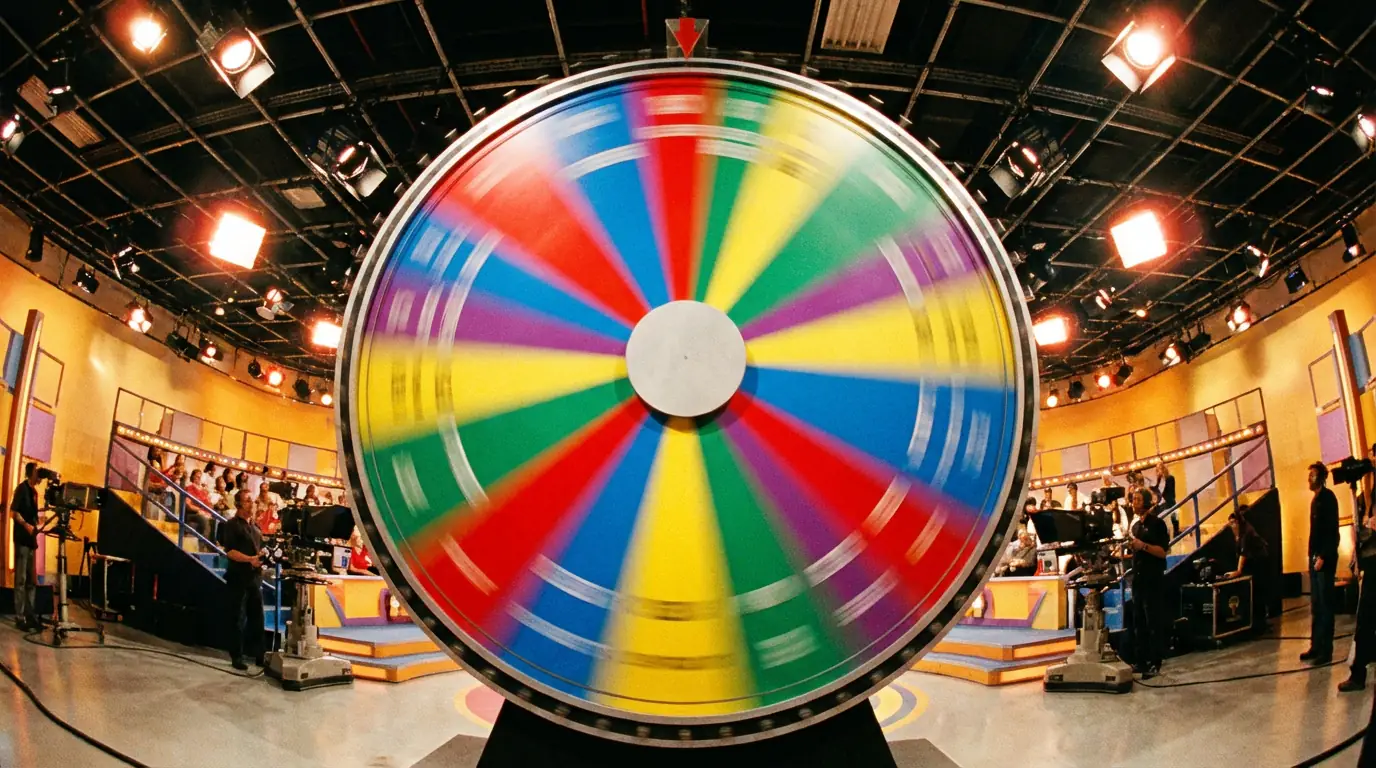
Live game shows are a category of casino game that borrows its format from television entertainment rather than from traditional gambling. A charismatic host presents the game from a purpose-built studio, interacting with players through a chat feed while operating a physical wheel, board, or other prop that determines the outcome. The games stream in real time, and the visual production — lighting, set design, sound effects, camera angles — is closer to a TV broadcast than to a standard live dealer table.
Evolution Gaming created the category with Dream Catcher in 2017, a simple money wheel game with a live host. The format proved enormously popular, and Evolution rapidly expanded the concept into a suite of game show titles that now represents one of the fastest-growing segments in online gambling. Pragmatic Play followed with its own game show lineup, and the category has become a standard feature at non-GamStop casinos alongside slots, table games, and traditional live dealer offerings.
The appeal is accessibility. Game shows require no strategy knowledge, no understanding of complex rules, and no prior casino experience. You pick a segment on a wheel, or a number on a board, or a box in a grid. The host spins, reveals, or opens. You win or you don’t. The simplicity lowers the barrier to entry for players who find blackjack intimidating or roulette too dry. It also makes game shows the most social live casino format — the chat feed is active, the host responds to messages, and the shared experience of watching a wheel spin creates communal tension that individual table games lack.
At non-GamStop casinos, game shows are typically the most prominently featured live games in the lobby. Their visual appeal makes them effective marketing material, and their broad player base generates consistent revenue. The house edges are higher than on traditional table games, which makes them profitable for operators despite the elevated production costs of running a studio with a professional host around the clock.
Popular Titles: Crazy Time, Monopoly Live, Deal or No Deal
Crazy Time is Evolution’s flagship game show and the most-played title in the category across both regulated and non-GamStop casinos. The game centres on a large vertical wheel divided into 54 segments. Players bet on which segment the wheel will stop at: numbers 1, 2, 5, or 10 (paying their face value as a multiplier), or one of four bonus games — Coin Flip, Cash Hunt, Pachinko, and Crazy Time. Each bonus game is a separate interactive feature with its own mechanic and the potential for multiplied payouts.
The Crazy Time bonus is the signature feature: a giant wheel-within-a-wheel where multipliers can stack to produce payouts exceeding 20,000x the bet. These outcomes are exceptionally rare, but they generate the viral moments and social media clips that drive new players to the game. The base wheel also features a random “Top Slot” multiplier that can enhance any segment’s payout, adding another layer of unpredictability to each spin.
Monopoly Live combines the Dream Catcher money wheel with an augmented reality Monopoly board. Bonus rounds transport players to a 3D Monopoly game where Mr. Monopoly rolls dice and moves around the board, collecting multipliers from properties. The multipliers accumulate until Mr. Monopoly passes Go, at which point the total multiplier is applied to the player’s bet. The production quality is high, and the Monopoly branding brings built-in familiarity that few other casino games can match.
Deal or No Deal Live adapts the television format into a three-phase gambling experience. Players first qualify for the main game through a qualifying round (spinning a combination lock to match three gold segments), then set their preferred briefcase value through a top-up phase, and finally play the classic open-or-deal game against the Banker. The qualification requirement means players spend money before the main game even begins, which inflates the effective cost. The house edge is among the highest of any game show title.
Pragmatic Play’s game show portfolio includes Mega Wheel (a simpler money wheel with multiplied segments), Sweet Bonanza CandyLand (combining a wheel with a slot-style bonus round), and Boom City (a dice-based game with a board mechanic). These titles are frequently available at non-GamStop casinos and offer a slightly different visual style from Evolution’s output — less cinematic, more colourful, with lower minimum bets in many cases.
House Edge and Expected Returns
Game shows carry higher house edges than traditional table games, and the edges vary significantly between bet types within the same game. Understanding where the house advantage sits is essential for managing expectations and bankroll.
On Crazy Time, the house edge on number bets ranges from approximately 3.5% to 4.1% depending on the segment. The bonus bets (Coin Flip, Cash Hunt, Pachinko, Crazy Time) carry edges between roughly 3.5% and 5.5%. The overall RTP of the game is approximately 95.5%, which is comparable to a mid-range slot and meaningfully worse than blackjack, baccarat, or European roulette. The variance is high: most rounds produce modest returns or losses, with occasional bonus rounds generating disproportionately large payouts.
Monopoly Live has an overall RTP of approximately 96.2%, with the number segments carrying edges between 3.6% and 7.7% and the Monopoly bonus segments offering better theoretical returns — though the bonus is triggered infrequently and its outcomes are highly variable. Dream Catcher, the simplest game show, has an RTP of approximately 96.6% on its best segments and as low as 90.6% on the 40x segment — one of the worst individual bet options in any live game.
Deal or No Deal Live has an effective RTP that’s difficult to state precisely because it depends on the player’s decisions during the deal-or-no-deal phase and the cost of the qualifying round. Estimates place the effective return between 93% and 95% for most players, making it one of the most expensive game shows to play per unit wagered.
The pattern across all game shows is consistent: the flashier, higher-multiplier bet options tend to carry worse house edges than the simpler, lower-payout bets. The casino funds the spectacular occasional payouts by extracting more from each wager. Players attracted to the game by the viral 20,000x win clip are paying for someone else’s highlight reel through their own elevated losses.
Strategy or Pure Luck?
Game shows are predominantly luck-based. The wheel spins are random, the bonus outcomes are random, and no decision the player makes after placing the bet affects the result. In this respect, game shows are closer to slots than to table games — the player’s only meaningful choice is which bet to place and how much to wager.
That said, not all bets are equal. On Crazy Time, betting exclusively on the number 1 segment (which occupies the most positions on the wheel) produces the most frequent wins with the lowest variance. Betting exclusively on the Crazy Time bonus segment produces the rarest wins with the highest variance. Neither is “better” in terms of expected value — the house edge on each is in the same range — but the experience is radically different. Choosing low-variance bets is a legitimate strategy for preserving bankroll over longer sessions. Choosing high-variance bets is a legitimate strategy for maximising the chance of a single large payout within a short session.
Some players spread bets across multiple segments to increase the frequency of wins, accepting lower per-win returns in exchange for more consistent activity. Others concentrate their wager on a single bonus game, treating each spin as a binary event — either the bonus triggers or it doesn’t. Both approaches are valid, and neither changes the expected value. The choice is about how you want the session to feel, not about improving your odds.
Bankroll management is the only genuine strategic lever. Game show rounds resolve quickly — one spin every 45 to 60 seconds — and the temptation to bet on every round is strong because the host is entertaining, the chat is active, and the next spin is always imminent. Setting a per-round bet limit and a session budget before the show starts is the most effective form of strategy available.
The Show Must Go On
Live game shows are entertainment products first and gambling products second. The hosts are performers, the studios are sets, and the format is designed to hold attention for extended periods. The house edge funds the production, and the production keeps you watching — and betting.
At non-GamStop casinos, game shows occupy a growing share of the live lobby because they attract players who might not otherwise engage with traditional casino games. The accessibility is genuine: anyone can understand “pick a segment, spin the wheel.” The risk is that the entertainment value masks the mathematical cost. A player absorbed in the spectacle of Crazy Time’s bonus round may not notice that they’ve been betting for two hours at a 4% house edge — which, at five pounds per spin and 60 spins per hour, represents an expected loss of 24 pounds per hour.
Enjoy the show. Set a budget. And remember that the most compelling performance in any casino is the one designed to keep you in your seat.
Find more live casino content at gamesnotongamstop. Also explore our live dealer tables guide.