

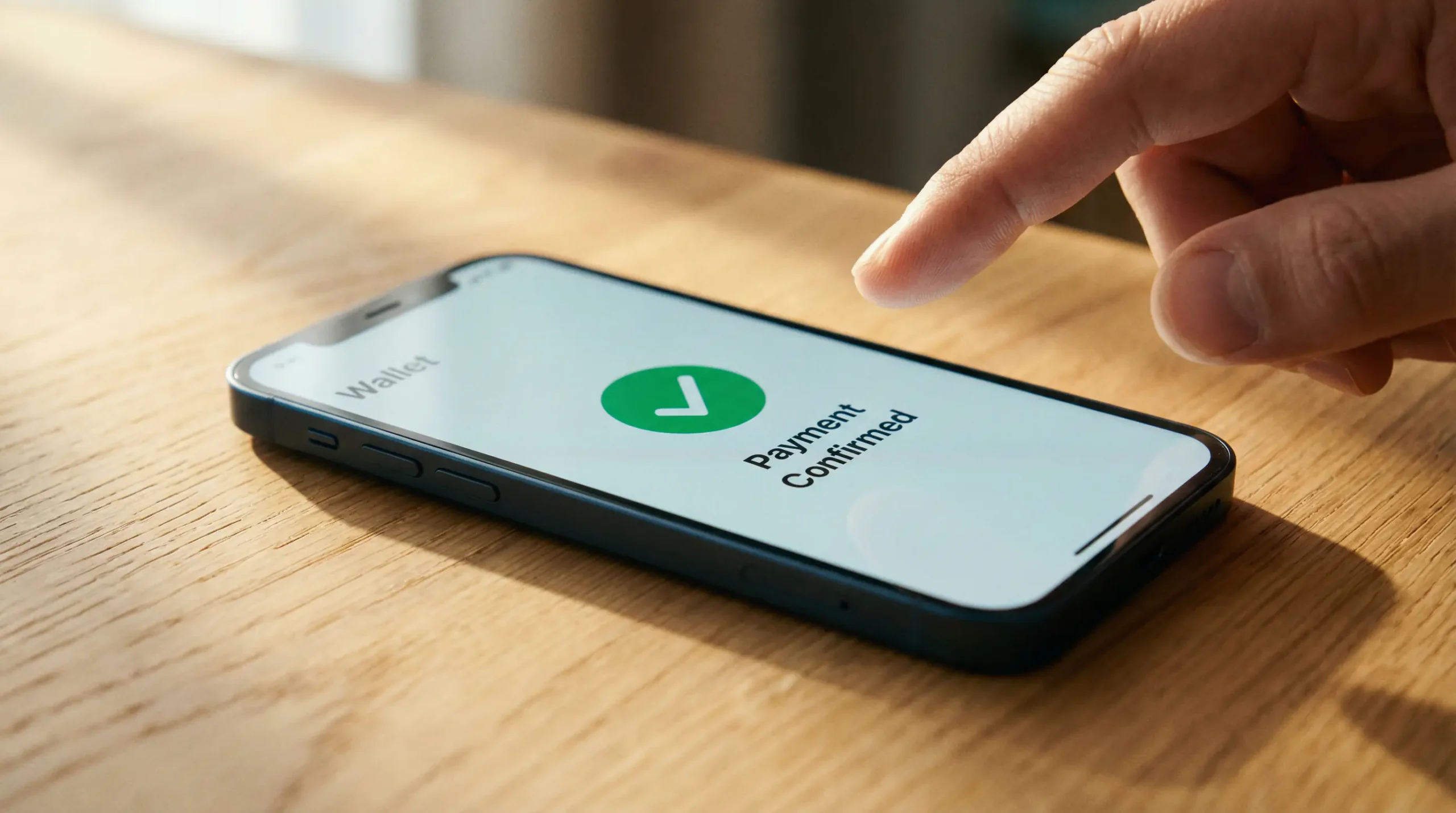
E-Wallet Benefits for Casino Players
E-wallets sit between your bank and the casino — and that buffer has practical value. When you deposit to an online casino using a debit card, the transaction appears on your bank statement as a gambling payment. Your bank sees it, your credit file may reflect it, and some UK banks actively flag or block transactions to gambling merchants. An e-wallet interposes a neutral intermediary: you fund the wallet from your bank, and the wallet funds the casino. The bank sees a transfer to Skrill or Neteller — a payment services company, not a gambling operator.
This separation offers privacy without the technical complexity of cryptocurrency. The player maintains a conventional banking relationship, uses familiar interfaces, and avoids the volatility and learning curve associated with crypto. For UK players at non-GamStop casinos, e-wallets also bypass a practical problem: some banks decline transactions to offshore gambling sites, even when the player initiates them voluntarily. An e-wallet funded by bank transfer or debit card is less likely to encounter this block because the payment to the casino originates from the e-wallet provider’s infrastructure, not from the player’s bank directly.
Speed is the second major benefit. E-wallet withdrawals at non-GamStop casinos are typically processed faster than card withdrawals or bank transfers. Once the casino approves the payout (a process that can take anywhere from a few minutes to 48 hours depending on the operator), the funds arrive in the e-wallet within minutes. From there, the player can hold the balance in the wallet, transfer it to their bank, or use it at another merchant. The two-step process — casino to wallet, then wallet to bank — adds flexibility that direct bank withdrawals don’t provide.
Account management features round out the advantages. E-wallets offer transaction histories, balance alerts, spending categorisation, and in some cases the ability to set internal spending limits. For a player managing a gambling budget, having a dedicated e-wallet funded with a fixed weekly amount creates a natural boundary: when the wallet is empty, the session is over, without any temptation to dip into the main bank account for a top-up.
Skrill vs Neteller vs PayPal at Non-GamStop Sites
Skrill and Neteller are both owned by Paysafe Group and are the two dominant e-wallets in the online gambling industry. Their feature sets overlap considerably, but they differ in availability, fee structures, and VIP programmes in ways that matter for casino players.
Skrill is the more widely accepted of the two at non-GamStop casinos. Almost every offshore casino that supports e-wallet payments includes Skrill in its deposit options. Account creation is straightforward — name, email, address, and identity verification through document upload. Deposits to casinos are instant. Withdrawals from casinos to Skrill are typically processed within 24 hours of casino-side approval. Skrill’s VIP programme reduces fees and improves exchange rates for high-volume users, which is relevant for players who move significant sums through the platform regularly.
Neteller has historically been the e-wallet most closely associated with online gambling. Its adoption was driven by the poker boom of the mid-2000s, and its infrastructure was built with gambling transactions as a primary use case. At non-GamStop casinos, Neteller availability is nearly as broad as Skrill’s. The user experience is similar: instant deposits, fast withdrawals, and a VIP tier system with fee reductions for active users. One distinction is Neteller’s Net+ prepaid card, which allows direct spending from the Neteller balance at any Mastercard-accepting merchant — a convenience for players who want to use casino winnings for everyday purchases without transferring back to their bank.
PayPal is the global leader in e-wallets but has a complicated relationship with non-GamStop casinos. PayPal restricts its gambling services to operators licensed in specific jurisdictions — primarily the UKGC, MGA, and a handful of others. The majority of Curacao-licensed non-GamStop casinos do not accept PayPal. Occasional exceptions exist, particularly among operators holding dual licences (MGA plus Curacao), but UK players should not expect PayPal availability as standard at non-GamStop sites. If PayPal is your preferred payment method, you will most likely need an alternative for offshore gambling.
MiFinity, ecoPayz (now Payz), and Jeton are secondary e-wallets that appear at some non-GamStop casinos. Their market share is smaller, their fee structures vary, and their brand recognition is lower — but they function adequately for players who prefer not to use Skrill or Neteller. Check availability at your chosen casino before creating an account with a secondary provider.
Deposit and Withdrawal Speeds
Deposits from e-wallets to non-GamStop casinos are instant in virtually all cases. The funds leave your wallet and appear in your casino balance within seconds. This speed applies to Skrill, Neteller, and any other supported e-wallet. There is no processing delay, no pending period, and no confirmation wait — the transaction is effectively real-time.
Withdrawals are a two-stage process: casino processing and network transfer. The casino’s internal processing time — the delay between requesting a withdrawal and the casino releasing the funds — varies between operators and is the primary bottleneck. Some non-GamStop casinos process e-wallet withdrawals within an hour. Others impose a 24 to 48-hour review period. A few insert deliberate delays (reverse withdrawal windows, mandatory cooling-off periods) that allow the player to cancel the withdrawal and continue playing — a practice designed to increase the probability of redepositing.
Once the casino releases the funds, the e-wallet transfer itself is near-instant. Skrill and Neteller both process incoming payments within minutes. The total withdrawal time — from clicking “withdraw” to seeing funds in your wallet — ranges from under an hour at the fastest non-GamStop casinos to two or three days at the slowest. If withdrawal speed is a priority, research the casino’s average processing times through player forums and review sites before depositing.
Transferring funds from your e-wallet back to your bank adds another stage. Skrill and Neteller both offer bank transfer withdrawals, typically processed within one to three business days. The complete chain — casino to wallet to bank — can therefore take anywhere from a few hours to nearly a week, depending on the casino’s processing speed and your bank’s incoming transfer handling.
Fees and Limits
E-wallets are not free to use, and the fee structures are worth understanding before committing to a provider.
Skrill charges a percentage fee on certain deposit methods (funding the wallet from a credit or debit card typically incurs a 1-2.5% fee; bank transfers are free). Casino deposits from Skrill are usually free — the casino absorbs the cost. Withdrawals from Skrill to your bank account carry a fee that varies by currency and withdrawal method but is typically in the range of 2-5 pounds per transaction. Skrill also charges an inactivity fee (approximately 3 euros per month) on accounts that have been dormant for 12 months or more.
Neteller follows a similar model. Funding the wallet by bank transfer is free; funding by card incurs a fee. Casino transactions (both deposits and withdrawals) are typically free at the casino end. Withdrawals from Neteller to your bank carry fees comparable to Skrill. Neteller also charges a currency conversion fee (3.99% on the Paysafe Group exchange rate) when transactions involve different currencies — relevant for UK players at casinos that operate in euros or US dollars.
Deposit and withdrawal limits at non-GamStop casinos vary by operator and by payment method. E-wallet minimums typically start at 10-20 pounds for deposits and 20-50 pounds for withdrawals. Maximum limits are higher than card payments at most sites — e-wallets can usually handle single transactions of several thousand pounds, and VIP accounts may have elevated or negotiable limits. The e-wallet provider also imposes its own transaction and balance limits, which may be lower than the casino’s until the account is fully verified.
The Middle Layer
E-wallets work best when treated as what they are: a financial buffer between your bank and the casino. They don’t change the odds, don’t reduce the house edge, and don’t make gambling safer in any mathematical sense. What they provide is practical separation — your gambling transactions stay in their own lane, your bank sees only a transfer to a payment company, and your withdrawal funds arrive faster than through traditional banking channels.
For UK players at non-GamStop casinos, Skrill and Neteller are the reliable defaults. They’re widely accepted, functionally equivalent for most purposes, and mature enough to trust with significant balances. Fund the wallet with a fixed amount, treat that balance as your gambling budget, and when it’s gone, resist the impulse to top it up. The middle layer is only as useful as the discipline behind it.
Find more payment guides at gamesnotongamstop. Also see our payments handbook.