
How Curacao Licensing Works
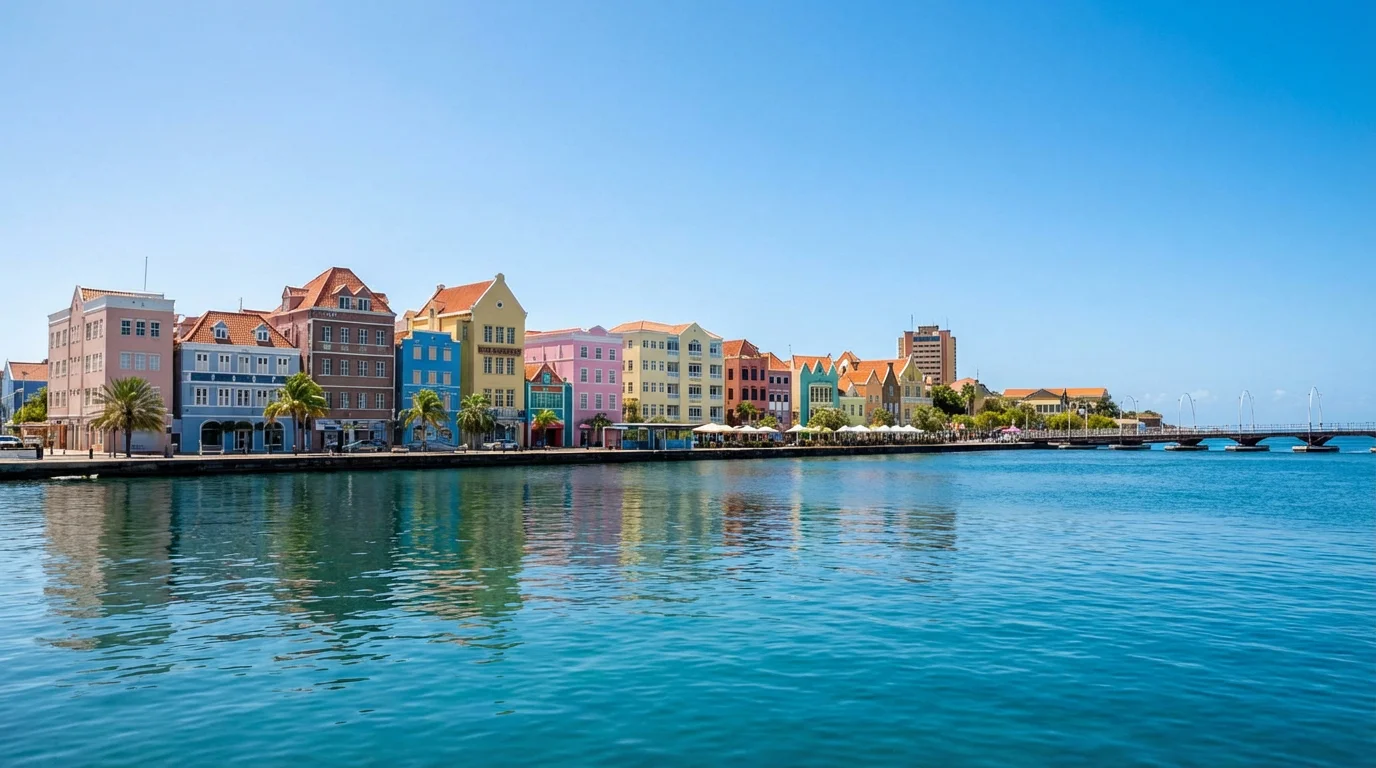
Curacao is the most common licensing jurisdiction for non-GamStop casinos that accept UK players. The island — a constituent country of the Kingdom of the Netherlands, located in the Caribbean — has been issuing online gambling licences since 1996, making it one of the oldest eGaming jurisdictions in the world. Its licensing framework predates the UKGC’s online gambling regulations by nearly a decade.
The system historically operated through a master-licence model. The Curacao government issued a small number of master licences to established companies, which then sub-licensed their authorisation to individual casino operators. This meant a single master licence could cover dozens or even hundreds of casino brands, each operating under the authority of the master licence holder rather than under direct government oversight. The practical consequence was a licensing environment with low barriers to entry, fast approval times, and minimal ongoing regulatory scrutiny compared to jurisdictions like the UK, Malta, or Gibraltar.
In 2023, Curacao began reforming its gambling regulatory framework. The Curacao Gaming Control Board (GCB), originally established in 1999 to oversee land-based casinos, was expanded in scope, and the new Curacao Gaming Authority (CGA) was established to replace the older self-regulatory model for online gaming. The reform aimed to bring Curacao’s standards closer to international norms: stricter due-diligence requirements for licensees, enhanced player protection mandates, and greater enforcement capability. The transition has been gradual, and as of 2026, the market includes both operators licensed under the new framework and legacy operators still operating under older sub-licence arrangements. For UK players, this means the quality and accountability of Curacao-licensed casinos varies more widely than in any other single jurisdiction.
The cost of a Curacao licence is substantially lower than a UKGC or MGA licence. Application fees, annual renewals, and compliance costs are a fraction of what tier-one jurisdictions charge. This makes Curacao the natural entry point for new operators, including both legitimate businesses building toward broader licensing and opportunistic operations planning to extract maximum revenue with minimum investment. The licence itself doesn’t distinguish between the two — which is why additional due diligence from the player is essential.
Sub-Licence Types and What They Cover
Under the legacy system, Curacao sub-licences were issued by master licence holders — companies like Antillephone N.V., Curacao Interactive Licensing N.V. (CIL), Gaming Services Provider N.V., and a small number of others. Each master licence holder operated semi-independently, setting their own standards for sub-licensee vetting, complaint handling, and ongoing compliance monitoring.
Antillephone N.V. has historically been the most widely referenced master licence holder in the non-GamStop market. Casinos operating under an Antillephone sub-licence display a licence number (typically formatted as 8048/JAZ followed by a date-based reference) and a validation seal that can be clicked to verify the licence status on Antillephone’s website. The verification page confirms whether the licence is active and displays the name of the operating entity. This seal is the primary tool available to players for confirming a casino’s licensing status.
The scope of a Curacao sub-licence is broad. A single licence covers all forms of online gambling — casino games, sports betting, poker, bingo, lottery — under one authorisation. This contrasts with the UKGC, where separate licences are required for different gambling activities. The breadth of coverage is convenient for operators but means the licensing process doesn’t involve activity-specific scrutiny: a casino and a sportsbook receive the same licence through the same process, regardless of the different risk profiles each activity carries.
Under the new GCB framework, the sub-licence model is being replaced by direct licences issued by the regulatory body. New applicants apply to the GCB directly rather than through a master licence holder. Existing sub-licensees are expected to transition to the new system over a defined period. This transition is intended to improve accountability — a direct regulatory relationship replaces the intermediary layer that characterised the old model — but the timeline and enforcement rigour of the transition remain works in progress.
Player Protection Under Curacao Law
Player protection under Curacao licensing has historically been the jurisdiction’s weakest point. The legacy framework imposed minimal requirements on operators regarding responsible gambling tools, complaint resolution, or player fund segregation. Operators were expected to maintain basic standards — fair games, accessible terms and conditions, a functional complaint process — but enforcement was inconsistent and the consequences of non-compliance were rarely severe.
The reformed framework under the GCB introduces stronger player protection mandates, including requirements for responsible gambling tools, AML (anti-money laundering) compliance, and clearer complaint resolution procedures. How effectively these requirements are enforced in practice is still being established. The GCB is a young institution, and its track record of enforcement actions, licence revocations, and player complaint resolutions is too limited to draw firm conclusions about its effectiveness.
In practical terms, player protection at a Curacao-licensed casino depends more on the operator’s voluntary standards than on the regulator’s enforcement. Some Curacao-licensed casinos implement deposit limits, session timers, self-exclusion, and responsive customer support because they recognise these features as commercially valuable and ethically appropriate. Others offer the bare minimum — or less. The licence doesn’t reliably predict which experience you’ll receive.
Dispute resolution is the area where Curacao’s limitations are most acutely felt. At a UKGC-regulated casino, unresolved disputes can be escalated to an independent Alternative Dispute Resolution (ADR) provider such as IBAS or eCOGRA. At a Curacao-licensed casino, the complaint path typically runs from customer support to the master licence holder (under the legacy system) or to the GCB (under the new system). Historical response times from master licence holders have been slow, and outcomes have frequently favoured the operator. Players with unresolved complaints at Curacao casinos have limited practical recourse beyond chargeback requests through their payment provider — and chargebacks are not guaranteed to succeed.
Verifying a Curacao Licence
Verification is straightforward in theory and inconsistent in practice. A legitimate Curacao-licensed casino should display its licence number and a clickable verification seal, typically in the website footer. Clicking the seal should redirect to the master licence holder’s (or the GCB’s) verification page, confirming the licence status, the operating entity, and the domain covered.
The first check is whether the seal links anywhere at all. A static image of a licence badge with no hyperlink is a red flag — it may be copied from a legitimate source and placed on an unlicensed site. The second check is whether the linked verification page corresponds to the casino you’re evaluating. The domain listed on the verification page should match the domain you’re visiting. If the verification page shows a different domain, the casino may be operating under a licence issued to another entity.
Cross-referencing the licence number against community databases and player forums can provide additional confidence. Long-running casino review sites maintain lists of known licence numbers and their associated operators. A licence number that appears on dozens of unrelated casino brands may indicate a bulk sub-licensing operation with limited individual oversight.
If a non-GamStop casino claims to hold a Curacao licence but provides no verifiable licence number, no clickable seal, and no information about the operating entity, treat it as unlicensed until proven otherwise. The cost of verifying a licence is five minutes of your time. The cost of depositing at an unlicensed site is potentially everything you deposit.
A Licence Is a Starting Point, Not a Guarantee
A Curacao licence confirms that the operator has met the minimum requirements of the jurisdiction — which, under the legacy system, were modest. It does not guarantee fair treatment, prompt withdrawals, responsive support, or responsible gambling infrastructure. Those qualities depend on the operator’s business practices, not on the document hanging on the virtual wall.
The best Curacao-licensed casinos operate at standards that approach or match MGA-regulated sites: segregated player funds, certified game RTP, professional support teams, and consistent withdrawal processing. The worst operate as extraction machines designed to take deposits and obstruct withdrawals. The licence doesn’t distinguish between them.
Use the licence as a starting point, not an endpoint. Verify it. Check the operator’s reputation. Test the withdrawal process with a small amount. Read the terms. And remember that the strongest protection available at any Curacao-licensed casino is the player’s own willingness to walk away from an operator that doesn’t earn their trust — before the deposits become large enough to matter.