
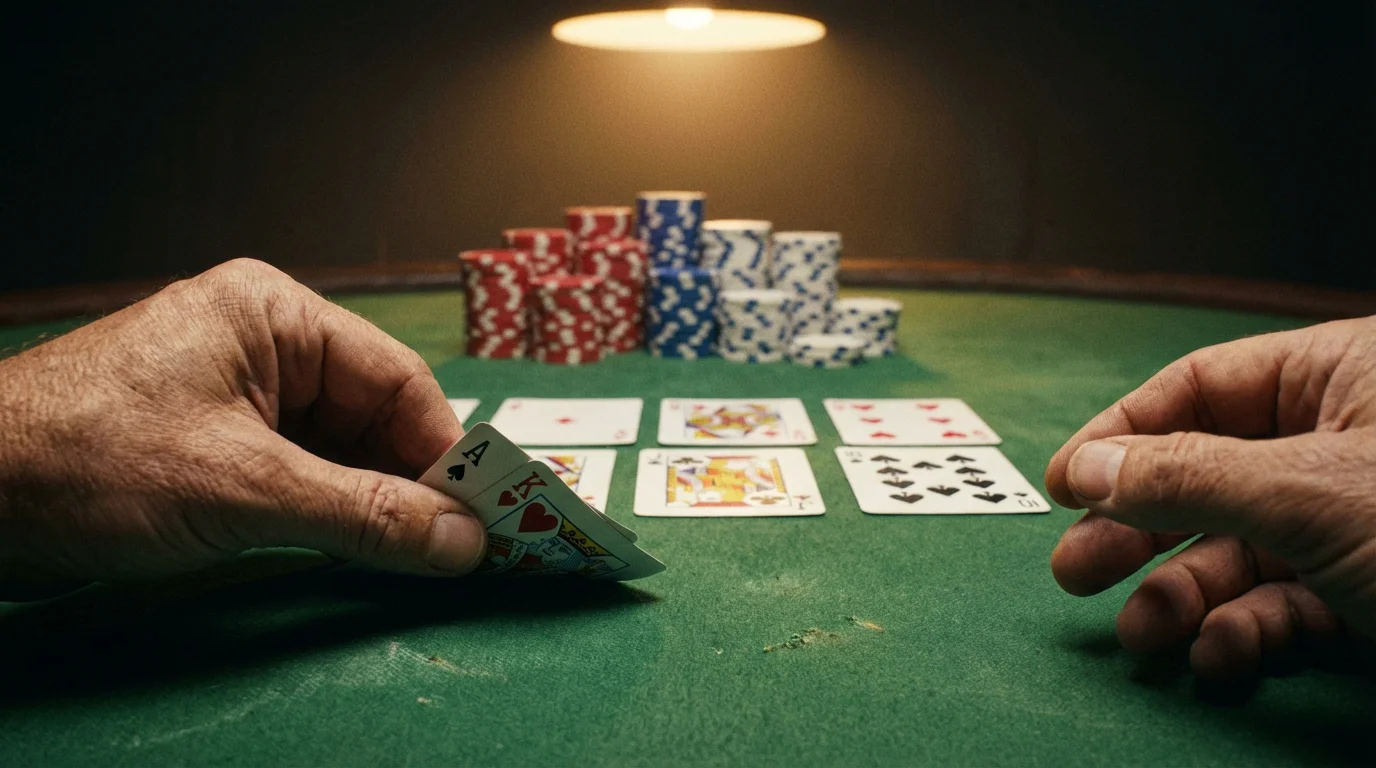
Poker Formats Available Outside GamStop
Poker outside GamStop comes in more flavours than most players realise. The self-exclusion scheme locks UK players out of every UKGC-licensed poker room, which in practice means losing access to the major networks that serve the regulated British market. Non-GamStop casinos, licensed offshore, restore that access — and in some cases expand it into formats and structures that UKGC platforms either don’t carry or restrict.
Texas Hold’em remains the dominant format, and it appears at non-GamStop sites in three main forms. Cash games (also called ring games) let you buy in and leave at any time, with blinds fixed at the level you choose. Tournament poker — Sit and Go, multi-table, and scheduled events — offers a fixed buy-in and escalating blinds, with prize pools distributed among the top finishers. Casino Hold’em is a different animal entirely: the player competes against the house rather than other players, using Hold’em hand rankings. The house edge in Casino Hold’em hovers around 2.2% with optimal strategy, which makes it a worse proposition than proper poker but a reasonable table game if you simply want poker-style hands without the player-versus-player element.
Omaha Hi is the second most popular community-card game at non-GamStop sites. Each player receives four hole cards instead of two and must use exactly two of them combined with three of the five community cards. The mandatory two-card rule is where beginners trip up — in Hold’em, you can play the board; in Omaha, you cannot. Omaha Hi-Lo splits the pot between the best high hand and the best qualifying low hand (eight or better), adding another layer of complexity and creating larger pots when multiple players chase different halves of the split.
Video poker, often overlooked in favour of its live and community-card cousins, sits in the casino game section rather than the poker room. It deserves its own discussion, and it gets one below. Caribbean Stud, Three Card Poker, and Pai Gow Poker round out the house-banked options at most non-GamStop casinos. Each plays against the dealer, each has a defined house edge, and each offers optional bonus bets with elevated edges and the occasional large payout. They’re poker-themed casino games, not poker in the competitive sense.
The meaningful distinction between cash games and tournaments at non-GamStop sites comes down to player pools. Offshore poker rooms tend to have smaller, softer fields than the major regulated networks. For a skilled player, that’s an advantage — weaker opposition translates into higher expected win rates. For the poker room itself, low traffic can mean longer wait times, fewer game types running simultaneously, and tournaments that don’t always fill. Whether the trade-off works for you depends on your skill level, your patience, and the specific site’s traffic patterns during UK evening hours when demand peaks.
Video Poker: RTP Kings
Video poker is the highest-RTP game most players ignore. While slots dominate the non-GamStop casino lobby and blackjack gets the strategic respect, video poker quietly offers return-to-player percentages that exceed both — often surpassing 99% with optimal play. That’s a house edge below 1%, which puts it in the same territory as the best blackjack tables and well ahead of any slot machine on the market.
Jacks or Better is the foundation. The game deals five cards, the player chooses which to hold, and the remaining cards are replaced. Payouts begin at a pair of jacks. The full-pay version (often labelled 9/6, referring to the payouts for a full house and a flush) returns 99.54% with perfect strategy. That means for every hundred pounds wagered, the expected loss is 46 pence. Compare that to a typical online slot at 96% RTP, where the expected loss is four pounds per hundred, and the gap becomes clear.
Deuces Wild replaces the standard pay table with one that makes all twos wild, dramatically increasing the frequency of strong hands while adjusting payouts downward for common hands like two pair (which pays nothing in the standard Deuces Wild pay table). The full-pay version returns 100.76% with optimal play — one of the extremely rare casino games where the player holds a mathematical edge. Finding true full-pay Deuces Wild at non-GamStop casinos is uncommon, but inferior pay tables still frequently return over 99%.
Joker Poker adds one or two joker cards to the deck as wild cards. The game requires at least two pair (or sometimes kings or better) to trigger a payout, and the wild card creates more opportunities for high-ranking hands. Return percentages vary widely depending on the pay table, ranging from roughly 97% to over 100% on the most generous versions.
The critical factor in video poker is the pay table, not the game title. Two machines both labelled “Jacks or Better” can have different pay tables: 9/6 (full pay, 99.54% RTP), 8/5 (97.30%), or even 7/5 (96.15%). At non-GamStop casinos, the pay table is usually displayed on the game’s information screen, but not always prominently. Before committing to a video poker game, check the payouts for a full house and a flush. Those two numbers tell you almost everything you need to know about the game’s return.
Optimal strategy for video poker is more complex than most players expect — Jacks or Better alone has roughly 19,000 unique starting hands, each with a mathematically correct hold decision. Simplified strategy cards reduce this to a ranked list of about thirty hand types, ordered by expected value. Following a simplified strategy rather than intuition typically costs less than 0.1% in return, which is a reasonable trade-off. The key principle: never break a winning hand to chase a higher one unless the expected value of the draw exceeds the guaranteed payout. Hold a low pair over four to a flush. Hold two pair over four to a straight. The maths doesn’t care how exciting the draw looks.
Live Poker and Tournaments at Non-GamStop Sites
The tournament scene at non-GamStop sites is small but growing. Unlike the major UKGC-regulated poker networks — which can run multi-table tournaments with hundreds or thousands of entries — offshore poker rooms typically attract smaller fields. That’s both a limitation and an opportunity.
Smaller fields mean smaller guaranteed prize pools. A non-GamStop poker room might run a daily tournament with a hundred-pound buy-in and a two-thousand-pound guarantee, whereas a major regulated network would offer ten times that. For recreational players, smaller tournaments are actually easier to navigate — fewer opponents, shorter run times, and a higher percentage of the field collecting a payout. For grinders who rely on volume, the limited schedule can be frustrating.
Sit and Go tournaments — typically six to nine players, starting as soon as all seats fill — are more reliably available at non-GamStop sites. They require less scheduling and fill faster even with lower overall traffic. Buy-ins range from a few pounds to several hundred, and the structure varies from turbo (fast blind levels, twenty minutes or less per tournament) to standard (slower levels, more strategic play).
Live dealer poker in the casino format — Casino Hold’em, Three Card Poker, Caribbean Stud — is widely available at non-GamStop casinos through Evolution Gaming and Pragmatic Play Live. These games pit the player against the dealer rather than other players, so the competitive element is absent. What they offer instead is the atmosphere of live play: a real dealer, physical cards, and social interaction through the chat function. The house edges range from roughly 2% (Casino Hold’em with optimal strategy) to over 5% (Caribbean Stud with the progressive side bet), placing them firmly in the casino game category rather than the poker category.
For UK players seeking genuine player-versus-player poker outside GamStop, the practical options are narrower than for casino games. Dedicated offshore poker clients exist, but traffic levels vary enormously. Before depositing, check the lobby during the hours you typically play. Look at the number of active tables at your preferred stakes and format. An offshore poker room with three active Hold’em tables at micro stakes during UK peak hours is not the same proposition as one with twenty tables across multiple limit levels. The software exists; the question is whether enough opponents do.
Starting Hands That Matter
Position is the most underrated edge in poker. A hand that’s worth raising from the button can be worth folding from early position, and most beginners make the mistake of treating all seats at the table equally. In Hold’em, the later you act in a hand, the more information you have — and information is the currency of poker.
From early position (first three seats after the blinds at a nine-handed table), restrict yourself to premium hands: pocket aces, kings, queens, jacks, ace-king suited, and ace-queen suited. These hands have enough raw equity to play profitably against the wide range of hands that the remaining players might hold. From middle position, add pocket tens, nines, ace-jack suited, king-queen suited. From late position (cutoff and button), you can open significantly wider — suited connectors like nine-ten suited, smaller pocket pairs, and suited aces become playable because you’ll have position for the rest of the hand.
In Omaha, starting hand selection is even more important because the gap between strong and weak starting hands is larger. Look for hands with coordinated components: double-suited aces with connected side cards are the gold standard. Avoid hands with dangling low cards that don’t connect to anything — four random cards in Omaha look like a hand but play like a trap.
The simplest framework for beginners: tight in early position, looser in late position, and aggressive with strong hands rather than passive. Calling is almost always worse than raising or folding. A raise defines your hand’s strength, builds the pot when you’re ahead, and gives opponents a chance to make mistakes. Calling does none of those things.
Suited and Booted
If you can beat the player across the table, the licence on the wall is irrelevant. Poker is the rare casino game where the house isn’t your opponent — it takes a rake from each pot and leaves the rest to the players. Your edge comes from making better decisions than the people sitting with you, and that edge doesn’t disappear because the casino is licensed in Curacao rather than London.
Non-GamStop poker rooms tend to attract weaker fields. The strongest UK players cluster on the major regulated networks; the offshore rooms attract a mix of recreational players, GamStop registrants looking for action, and international players from jurisdictions with limited local options. For a disciplined player with solid fundamentals, that softer competition translates directly into higher win rates — assuming the traffic is there to support your preferred stakes and format.
Bring the same bankroll management you’d use anywhere. Twenty to thirty buy-ins for cash games, fifty to a hundred for tournaments. Don’t overestimate your edge against unknown opponents, and don’t underestimate how quickly variance can chew through an under-funded bankroll. The maths of poker is ruthlessly fair: skill wins over time, but only if you survive the short-term swings. Play within your means, play within your ability, and let the cards — and the players — take care of the rest.